📌 Introduction: The End of the 'Tool' Era
For decades, enterprise software has been viewed as a set of tools—glorified digital filing cabinets and workflow engines that employees learn to operate. But this paradigm is crumbling. The next generation of enterprise software will not be a tool you use; it will be an intelligent collaborator that anticipates your needs, automates complex decisions, and continuously adapts to your business. This shift is powered by artificial intelligence (AI) that is no longer a bolt-on feature but the core fabric of the application.
The pain point is clear: traditional enterprise systems are rigid, siloed, and demand extensive training. They capture data but fail to act on it intelligently. Business leaders are frustrated by the gap between the promise of digital transformation and the reality of clunky interfaces and manual workarounds. According to a 2024 survey by Gartner, 80% of executives believe AI will fundamentally change how their organizations operate, yet only 20% feel their current software is ready for this future.
In this article, we will explore the defining characteristics of the next generation of enterprise software. We will examine how AI-native design, hyperautomation, composable architectures, and enhanced user experiences will reshape the landscape. We will also discuss practical steps for implementation and common pitfalls to avoid. Whether you are a CIO, a business unit leader, or a product manager, this guide will help you navigate the coming transformation and leverage AI solutions to gain a competitive edge.
📌 From Automation to Augmentation: AI as the Core
The first generation of enterprise AI focused on automating repetitive tasks—think robotic process automation (RPA) for data entry. The next generation goes further: it augments human decision-making. Instead of just executing predefined rules, AI systems will analyze vast datasets, identify patterns, and recommend or even take actions that were previously the domain of skilled professionals. For example, in customer service, AI won't just route tickets; it will resolve them by pulling from knowledge bases, understanding sentiment, and escalating only the most complex issues with a summary of context.
This shift requires a fundamental redesign of software architecture. AI cannot be an afterthought; it must be embedded at the data layer, the workflow layer, and the user interface. AI-native enterprise software is built with machine learning models that continuously learn from user interactions and business outcomes. This means the software improves over time, becoming more personalized and predictive. Companies like Niravin are leading this charge by developing AI solutions that integrate seamlessly into existing business processes, turning data into actionable intelligence.
Consider a sales forecasting tool. Traditional software relies on historical data and manual input. An AI-native tool would analyze email sentiment, meeting transcripts, and market trends to predict deal outcomes with high accuracy, flagging risks and suggesting next steps. This level of augmentation transforms the role of the salesperson from data administrator to strategic advisor. As business AI matures, we will see similar transformations across finance, HR, supply chain, and beyond.
📌 Hyperautomation: Beyond Simple Workflows
Hyperautomation is often misunderstood as just more automation. In reality, it is a strategic approach that combines AI, machine learning, and RPA to automate end-to-end business processes that involve unstructured data and decision points. The next generation of enterprise software will have hyperautomation built-in, enabling organizations to orchestrate complex workflows across departments and systems without human intervention for routine decisions.
For instance, in procurement, hyperautomation can handle the entire cycle from requisition to payment. AI can read supplier contracts, extract key terms, negotiate better prices based on market data, and automatically approve invoices that match purchase orders. Exceptions are routed to humans with a clear explanation and recommended actions. This not only speeds up processes but also reduces errors and frees up staff for higher-value work. According to McKinsey, hyperautomation can reduce process costs by 30-50% and improve cycle times by up to 70%.
To achieve this, enterprise software must be designed with a process-mining engine that continuously analyzes workflows and identifies automation opportunities. It should also include low-code/no-code tools that allow business users to configure automation without IT involvement. This democratization of automation is a key trend: the next generation of software will empower line-of-business managers to build and modify automations themselves, fostering agility and innovation.
📌 Composable Architecture: The Lego Blocks of Enterprise Software
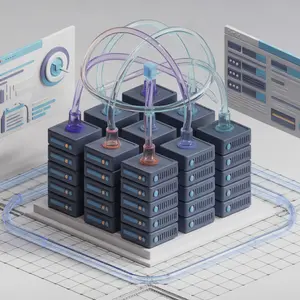
The monolithic enterprise systems of the past are being replaced by composable architectures. Instead of a single, massive application that tries to do everything, composable enterprise software is built from modular, interchangeable components that can be assembled and reassembled as business needs change. This approach, often called "composable ERP" or "composable commerce," allows organizations to innovate quickly and adapt to market shifts without lengthy and costly upgrades.
Composability is enabled by APIs and microservices, but the next generation takes it further with AI-driven assembly. Imagine a system that recommends which components to combine for a new business capability, or automatically configures workflows based on best practices learned from other organizations. This is where AI and composability intersect: AI can act as the architect, suggesting optimal configurations and even generating code for new components.
For example, a retailer launching a new subscription service could use a composable platform to quickly integrate billing, customer management, and fulfillment modules. The AI layer would ensure data flows seamlessly between them and might even predict churn risks based on usage patterns. This agility is a game-changer for businesses that need to pivot rapidly. However, composable architecture also introduces complexity in integration and governance, which we will address later.
📌 The User Experience: Conversational and Context-Aware
Enterprise software has long been criticized for poor user experience. The next generation will change that by adopting conversational interfaces and context-aware design. Instead of navigating menus and forms, users will interact with software through natural language—chatbots, voice assistants, or even augmented reality overlays. These interfaces will understand the user's role, current tasks, and preferences, providing personalized information and actions.
For instance, a field service technician could ask, "What's the maintenance history for this machine?" and receive a spoken summary while pointing their phone at the equipment. A finance manager could say, "Show me the budget variances for Q3," and the system would generate a report with explanations for each variance, highlighting areas needing attention. This level of contextual intelligence reduces training time and increases productivity.
Behind the scenes, this requires advanced natural language processing (NLP) and knowledge graphs that connect data across systems. The software must also be proactive: it should push relevant insights to users without being asked. For example, if a key supplier's risk score drops, the procurement manager receives an alert with suggested alternative suppliers. This shift from reactive to proactive is a hallmark of AI-driven enterprise software.
📌 Data as the Lifeblood: Unified and Real-Time
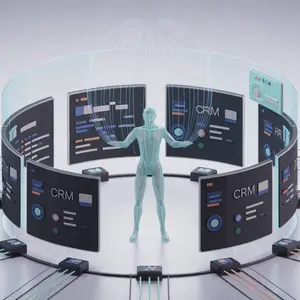
AI is only as good as the data it consumes. Traditional enterprise software often suffers from data silos, inconsistent formats, and latency. The next generation will treat data as a product, with unified data platforms that provide real-time access across the organization. This means that every application, whether it's CRM, ERP, or HR, will draw from a single source of truth, enriched with external data and continuously updated.
Real-time data is critical for AI to make timely decisions. For example, a supply chain AI needs up-to-the-minute information on inventory levels, shipping delays, and weather events to reroute orders proactively. Batch processing is no longer sufficient. Next-gen software will leverage event-driven architectures and streaming data pipelines to ensure that insights are always current.
Moreover, data governance and privacy will be built-in. With regulations like GDPR and CCPA, enterprises need assurance that AI models are trained on compliant data and that personally identifiable information is protected. The next generation of software will include automated data lineage, consent management, and bias detection to ensure ethical AI use.
📌 Common Mistakes to Avoid When Adopting Next-Gen Enterprise Software
As organizations embark on this transformation, several pitfalls can derail progress. Being aware of these common mistakes can save time and resources.
- Treating AI as a bolt-on: Simply adding a chatbot or predictive model to existing software won't deliver the benefits of AI-native design. AI must be integrated into the core architecture and workflows.
- Underestimating data readiness: AI requires clean, unified data. Many companies rush into AI without addressing data quality and silos, leading to poor model performance and mistrust.
- Ignoring change management: Next-gen software changes how people work. Without proper training and communication, employees may resist or misuse the new tools.
- Overcomplicating composability: While composable architecture offers flexibility, it can lead to integration spaghetti if not governed properly. Establish clear API standards and a centralized integration layer.
- Neglecting security and compliance: AI introduces new risks, such as data leakage and adversarial attacks. Ensure that security is baked into every layer and that compliance is continuously monitored.
📌 Conclusion: Preparing for the AI-Driven Enterprise
The next generation of enterprise software will be defined by AI that augments human capabilities, hyperautomation that orchestrates complex processes, composable architectures that enable agility, and user experiences that are intuitive and proactive. This shift is not a distant future; it is already underway, with early adopters gaining significant advantages in efficiency, innovation, and customer satisfaction.
To stay competitive, business leaders should start by assessing their current software stack and data infrastructure. Identify high-impact use cases for AI and hyperautomation, and pilot with a composable approach. Invest in data governance and change management. Partner with vendors like Niravin that offer AI solutions designed for the enterprise, ensuring that you are not just buying software but embracing a new way of working.
The actionable next step: Conduct an AI readiness assessment for your enterprise software portfolio. Evaluate which systems are candidates for replacement or augmentation, and develop a roadmap that prioritizes quick wins and long-term strategic goals. The future belongs to those who act now.
❓ FAQ: Next-Generation Enterprise Software
What is the difference between AI-native and AI-enabled enterprise software?
AI-native software is built from the ground up with AI as a core component, meaning machine learning models are integrated into the data layer, workflows, and user interface. AI-enabled software, on the other hand, has AI features added on top of a traditional architecture. AI-native solutions tend to be more adaptive, scalable, and capable of continuous learning, while AI-enabled may be limited by legacy constraints.
How can small and mid-sized businesses benefit from next-gen enterprise software?
Composable and cloud-based architectures make next-gen software more accessible and affordable for SMBs. They can start with modular components and scale as they grow, avoiding large upfront investments. AI-driven automation can help level the playing field by reducing manual work and providing insights that were previously available only to large enterprises.
What skills will employees need to work with AI-driven enterprise software?
Employees will need to shift from operational tasks to strategic and analytical roles. Skills such as data literacy, critical thinking, and the ability to interpret AI recommendations will become essential. Soft skills like adaptability and collaboration will also be crucial as workflows become more dynamic. Organizations should invest in upskilling and create a culture of continuous learning.
How do we ensure data security and privacy with AI in enterprise software?
Choose vendors that prioritize security and compliance, with features like encryption, access controls, and audit trails. Implement data governance policies that classify data and restrict AI access to sensitive information. Regularly audit AI models for bias and ensure they adhere to regulations. A zero-trust architecture and continuous monitoring are also recommended.
What is the role of low-code/no-code in next-gen enterprise software?
Low-code/no-code platforms democratize software development, allowing business users to build and modify applications and automations without deep technical skills. This accelerates innovation and reduces IT backlog. In next-gen software, these tools are often integrated with AI to suggest components and automate testing, making development even faster and more accessible.
✅ Implementation Checklist for Next-Generation Enterprise Software
- Assess your current software landscape and identify gaps in AI, automation, and data integration.
- Define clear business objectives for AI and hyperautomation, such as reducing process costs or improving customer satisfaction.
- Evaluate data quality and establish a unified data platform to support AI models.
- Choose a composable architecture that allows modular adoption and scalability.
- Select vendors that offer AI-native solutions and align with your security and compliance requirements.
- Develop a change management plan that includes training, communication, and support for employees.
- Start with pilot projects to demonstrate value and learn before scaling.
- Establish governance for AI ethics, data privacy, and model monitoring.
- Create a roadmap for continuous improvement and regular reassessment of AI use cases.
- Foster a culture of innovation and data-driven decision-making across the organization.