📌 Introduction: The Shift from Tools to Teammates
For decades, enterprise management systems—ERP, CRM, HRIS, supply chain platforms—have been passive record-keeping tools. Users log in, navigate menus, fill forms, and generate reports. The system waits for human input. But a fundamental shift is underway: artificial intelligence is moving from a behind-the-scenes analytics layer to an active participant that can execute tasks, make recommendations, and even negotiate with other systems. This is the era of intelligent agents.
The common assumption is that AI will simply add smarter dashboards or chatbots to existing software. That underestimates the disruption. Intelligent agents—autonomous software entities that perceive their environment, make decisions, and take actions—are poised to become the primary interface to enterprise systems. Instead of humans operating software, agents will operate software on our behalf, collaborating with other agents and humans in real time.
In this article, we'll explore how intelligent agents will reshape enterprise management systems, the architectural and organizational changes required, and practical steps to prepare. Whether you're a CIO evaluating AI solutions, a business leader planning digital transformation, or an IT manager tasked with integration, this guide will help you navigate the coming wave.
📌 What Are Intelligent Agents and Why Do They Matter for Enterprise Systems?
An intelligent agent is a software program that can perceive its environment (data, events, user requests), reason about goals, and take autonomous actions to achieve those goals. Unlike traditional automation (rule-based scripts), agents use machine learning and large language models to handle ambiguity, learn from outcomes, and adapt to new situations. In the enterprise context, agents can range from simple task bots (e.g., automatically categorizing support tickets) to complex multi-agent systems that coordinate procurement, logistics, and finance.
Why does this matter now? Three converging trends: (1) the maturity of large language models (LLMs) that can understand and generate human-like text and code; (2) the availability of APIs and integration platforms that allow agents to interact with core systems; and (3) the pressure on businesses to do more with less—automating routine work to free humans for higher-value tasks. According to Gartner, by 2028, 33% of enterprise software applications will include agentic AI, up from less than 1% in 2024.
For enterprise management systems, this means a fundamental redesign. Instead of designing screens for humans, vendors must design APIs and event streams for agents. Instead of static workflows, systems must support dynamic, goal-driven processes. And instead of data entry, the focus shifts to data quality and governance so agents can make reliable decisions.
📌 How Intelligent Agents Will Reshape Core Enterprise Functions
Finance and Accounting: From Monthly Close to Continuous Assurance
In traditional ERP finance modules, closing the books is a month-end marathon of reconciliations, accruals, and manual journal entries. Intelligent agents can automate much of this: they can monitor transactions in real time, flag anomalies, suggest corrections, and even initiate payments within policy limits. For example, an agent could detect a duplicate invoice, verify it against purchase orders and receipts, and either resolve it automatically or route it to a human with a recommended action. This shifts finance from reactive reporting to proactive control.
Moreover, agents can perform continuous audit and compliance checks, reducing the risk of fraud and errors. They can also generate narrative explanations for variances, helping CFOs understand performance drivers without digging through spreadsheets. The result: faster close cycles, lower costs, and better decision support.
Supply Chain: Autonomous Planning and Exception Handling
Supply chains are complex, dynamic networks prone to disruptions. Traditional ERP planning runs batch MRP (Material Requirements Planning) overnight, often reacting too late. Intelligent agents can operate continuously: monitoring supplier performance, predicting delays using external data (weather, news, social media), and automatically rerouting orders or adjusting safety stock. They can negotiate with supplier agents for better terms, within predefined guardrails.
For instance, if a key component is delayed, an agent could evaluate alternative suppliers, check contract terms, and place an expedited order—all without human intervention. Humans then focus on strategic sourcing and supplier relationships.
Human Resources: Personalized Employee Service
HR systems are often burdened with repetitive queries: "How many vacation days do I have?" "How do I update my benefits?" Intelligent agents can handle these 24/7, pulling data from HRIS and providing personalized answers. They can also assist with onboarding, performance reviews, and learning recommendations. More advanced agents can analyze employee sentiment and predict attrition risk, prompting proactive retention efforts.
But HR agents must be carefully designed to protect privacy and avoid bias. They should be transparent about data use and always allow escalation to a human HR partner.
Customer Service and Sales: The Rise of the Super-Assistant
CRM systems are already seeing agentic AI: sales agents that research prospects, draft personalized emails, and update records; service agents that resolve common issues and escalate complex ones. The future is a hybrid workforce where human reps are augmented by AI agents that handle routine tasks, provide real-time coaching, and surface next-best actions.
For example, a sales agent could monitor a customer's usage data, detect a drop in engagement, and automatically trigger a retention offer or schedule a call for the account manager. This level of proactive service was previously impossible at scale.
📌 Architectural Shifts: Building an Agent-Ready Enterprise
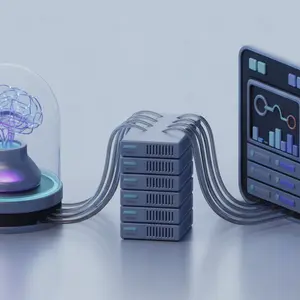
To support intelligent agents, enterprise systems need more than a chatbot interface. They require a fundamental architectural evolution. Here are the key shifts:
- API-first design: Every function must be accessible via well-documented APIs, so agents can interact programmatically. This also enables integration with third-party agents and AI solutions.
- Event-driven architecture: Agents need to react to events (e.g., order created, payment received) in real time. Systems should publish events to a central stream (e.g., Kafka) that agents can subscribe to.
- Data fabric and semantic layer: Agents need consistent, high-quality data. A semantic layer that defines business terms and relationships ensures agents interpret data correctly across systems.
- Agent orchestration and governance: You need a control plane to manage agent lifecycles, permissions, and interactions. This includes monitoring, logging, and kill switches.
- Human-in-the-loop interfaces: Agents should know when to ask for help. Systems must provide ways for humans to review, approve, or override agent actions.
These architectural changes are not trivial. They require investment in integration platforms, data governance, and security. But they are essential for reaping the benefits of agentic AI.
📌 Governance, Security, and Ethics: The Guardrails of Agentic AI
With autonomy comes risk. An agent that can place orders or modify records could cause significant damage if it malfunctions or is compromised. Therefore, robust governance is non-negotiable. Key considerations:
- Access control: Agents should have least-privilege access, limited to the data and actions they need. Use role-based and attribute-based access control.
- Auditability: Every agent action must be logged with context (who, what, when, why). This is crucial for compliance and debugging.
- Policy enforcement: Define business rules and constraints (e.g., spending limits) that agents cannot exceed. Use a policy engine to enforce them.
- Bias and fairness: Regularly test agents for biased decisions, especially in HR and customer-facing scenarios.
- Transparency: Agents should explain their reasoning in human-understandable terms, especially when recommending actions.
Organizations should establish an AI governance committee with representatives from IT, legal, compliance, and business units to oversee agent deployment and monitor performance.
📌 The Human-Agent Workforce: Redefining Roles and Skills
Intelligent agents won't replace humans entirely; they will change what humans do. Routine tasks will be automated, while demand will grow for skills in agent supervision, exception handling, and AI training. New roles like "agent manager" and "AI auditor" will emerge. Employees will need training in prompt engineering, data literacy, and critical thinking to work effectively with agents.
Change management is critical. Organizations must communicate the benefits, address fears, and involve employees in design. Successful implementations often start with small pilots that demonstrate value and build trust.
📌 Common Mistakes to Avoid
- Treating agents as just another chatbot: Agents that only answer questions but can't take action deliver limited value. Aim for agents that can execute end-to-end tasks.
- Ignoring data quality: Agents are only as good as the data they consume. Poor data leads to bad decisions. Invest in data governance first.
- Over-automating without guardrails: Giving agents too much autonomy without oversight can lead to costly errors or compliance breaches. Start with human-in-the-loop.
- Neglecting change management: Employees may resist or misuse agents if not properly trained and involved. Focus on user experience and communication.
- Building in isolation: Agentic AI requires cross-functional collaboration. Silos between IT, data, and business units will hinder progress.
📌 Conclusion: Preparing for the Agent-Powered Enterprise
The future of enterprise management systems is not just about adding AI features; it's about reimagining the system as a platform for intelligent agents. This shift promises greater efficiency, agility, and insight, but it requires deliberate planning and investment. Start by assessing your current architecture: are your systems API-first? Is your data reliable? Do you have governance in place? Then pilot a high-value use case, such as automating invoice processing or supply chain exception handling, and scale from there.
The organizations that embrace agentic AI early will gain a competitive edge. Those that wait may find themselves outpaced by more adaptive, automated competitors. The time to act is now.
❓ FAQ
What is the difference between intelligent agents and traditional automation?
Traditional automation follows predefined rules and handles structured tasks. Intelligent agents use AI to handle ambiguity, learn from outcomes, and make decisions in dynamic environments. They can adapt to new situations without explicit programming.
Will intelligent agents replace ERP systems?
No, they will augment them. ERP systems remain the system of record, but agents will become the primary interface for interacting with them, automating tasks and providing insights. ERPs will evolve to expose APIs and events that agents can use.
How can we ensure agents don't make costly mistakes?
Implement strong governance: define clear policies, use least-privilege access, require human approval for high-risk actions, and continuously monitor agent behavior. Start with pilot projects and gradually increase autonomy as trust is built.
What skills do employees need to work with intelligent agents?
Employees will need data literacy, critical thinking, and the ability to supervise and train agents. Prompt engineering and understanding of AI limitations will also be valuable. Soft skills like collaboration and adaptability remain crucial.
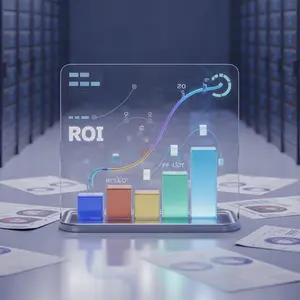
How do we measure the ROI of agentic AI?
Track metrics such as time saved on routine tasks, error reduction, cycle time improvements, and employee satisfaction. Also consider revenue impact from faster response times or better customer experiences. Start with baseline measurements before deployment.
✅ Implementation Checklist
- Assess current enterprise systems for API readiness and data quality.
- Define a clear business case for agentic AI with measurable KPIs.
- Establish an AI governance framework including policies, roles, and oversight.
- Choose a pilot use case with high impact and manageable risk (e.g., invoice processing).
- Select an AI solutions provider (like Niravin) that offers agent orchestration and integration capabilities.
- Design human-in-the-loop processes for agent actions requiring approval.
- Train employees on working with agents and change management.
- Implement monitoring and audit trails for all agent activities.
- Scale successful pilots to other functions, iterating based on feedback.
- Review and update governance regularly as agents evolve.